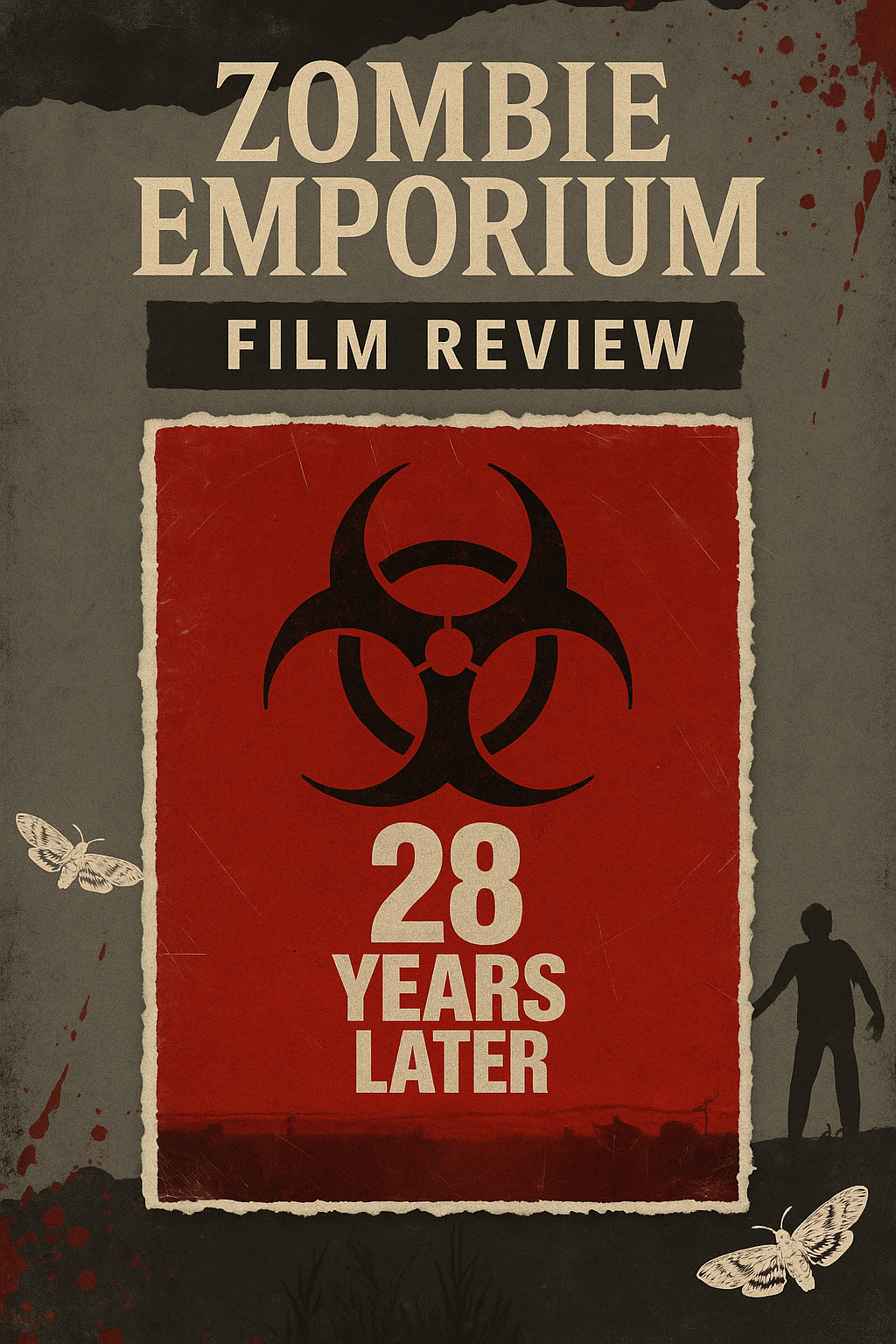

28 Years Later: Survival, Memory, and a World Changed by the Rage Virus
Nearly three decades after the Rage Virus first reshaped zombie cinema, the world of 28 Years Later feels both familiar and profoundly altered.
With the first part now available to stream and the second still unfolding in theaters, this return to the Rage Virus universe isn’t just a continuation of a story it’s a reflection on what time does to fear, survival, and memory. Having seen both parts, what’s immediately clear is that 28 Years Later isn’t interested in repeating the panic of the past. It’s interested in what lingers after the panic is gone.
A World That Didn’t Reset
In many apocalypse stories, time heals the damage. Societies rebuild. New rules form. Hope re-emerges.
28 Years Later challenges that idea.
This is a world that didn’t reset it adapted, fractured, and learned to live alongside its scars. The Rage Virus isn’t just an event in the past; it’s part of the environment, part of the collective memory. Survival here isn’t heroic or thrilling. It’s cautious, weary, and shaped by long-term consequences.
The horror doesn’t come from sudden collapse anymore.
It comes from endurance.
Infection, Fear, and the Weight of Time
In 28 Days Later, fear was immediate. Everything happened at once. Rage spread quickly, and the world ended overnight.
28 Years Later moves differently.
Fear has matured. It’s no longer fueled by surprise but by experience. People know what the Rage Virus can do and that knowledge changes how they move through the world. Infection isn’t just a threat; it’s a memory that informs every decision.
Time, in this story, is as powerful as the virus itself.
Why 28 Years Later Feels Different
This isn’t a louder or faster version of what came before.
Instead, 28 Years Later feels more restrained, more reflective. The film(s) focus less on spectacle and more on atmosphere on what it means to exist in a world permanently altered by catastrophe.
The tension comes from uncertainty rather than chaos. From silence rather than noise. From the understanding that survival alone doesn’t guarantee humanity.
It’s horror shaped by experience, not adrenaline.
The Zombie Genre Grows Up
Zombie stories have always reflected the fears of their time.
Early zombies embodied anxieties about death and control.
Later, they became symbols of consumerism, collapse, and social breakdown.
The Rage Virus introduced something new: ourselves as the threat.
28 Years Later pushes that idea further. It isn’t asking how the world ends it’s asking how people live after the end has already happened. What values remain. What is remembered. What is passed on.
In that way, it feels less like a sequel and more like a reckoning.
A Conversation That Continues
Where 28 Days Later changed the zombie genre through urgency and rage, 28 Years Later examines the long shadow those changes cast. It exists because the original film mattered and because its questions were never fully answered.
With critical discussion around the film already underway, coverage from The Guardian reflects how the Rage Virus story has re-entered the cultural conversation nearly thirty years after it first redefined modern zombie horror.
Thoughtful criticism from publications like The New Yorker also highlights how 28 Years Later approaches apocalypse not as spectacle, but as something lived with, remembered, and carried forward.
But this isn’t the place for verdicts or rankings.
Those conversations deserve their own space.
Survival as More Than Fiction
Stories like 28 Years Later remind us that survival isn’t about spectacle or strength it’s about endurance, adaptability, and access to the basics. Long after panic fades, the essentials still matter.
One of the simplest survival tools is clean drinking water. Portable water filtration systems like the LifeStraw Personal Water Filter reflect the same quiet preparedness seen in post-collapse stories that’s designed for emergencies, built for long-term use, and focused on lasting rather than fighting.
Final Thoughts from The Undead Journal
28 Years Later isn’t about recreating fear.
It’s about living with it.
It explores survival not as a victory, but as a condition shaped by memory, loss, and the quiet realization that the world never truly goes back to what it was.
In the next entry of The Undead Journal, we’ll take a closer look at 28 Years Later itself how it expands the Rage Virus mythology, how it reflects the world we’re living in now, and what it suggests about the future of zombie cinema.
For now, it’s enough to say this:
The rage didn’t disappear.
It adapted.
Affiliate disclosure: As an Amazon Associate, Zombie Emporium may earn a small commission from qualifying purchases at no additional cost to you.